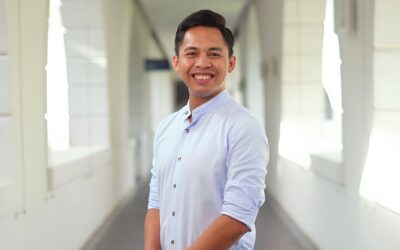
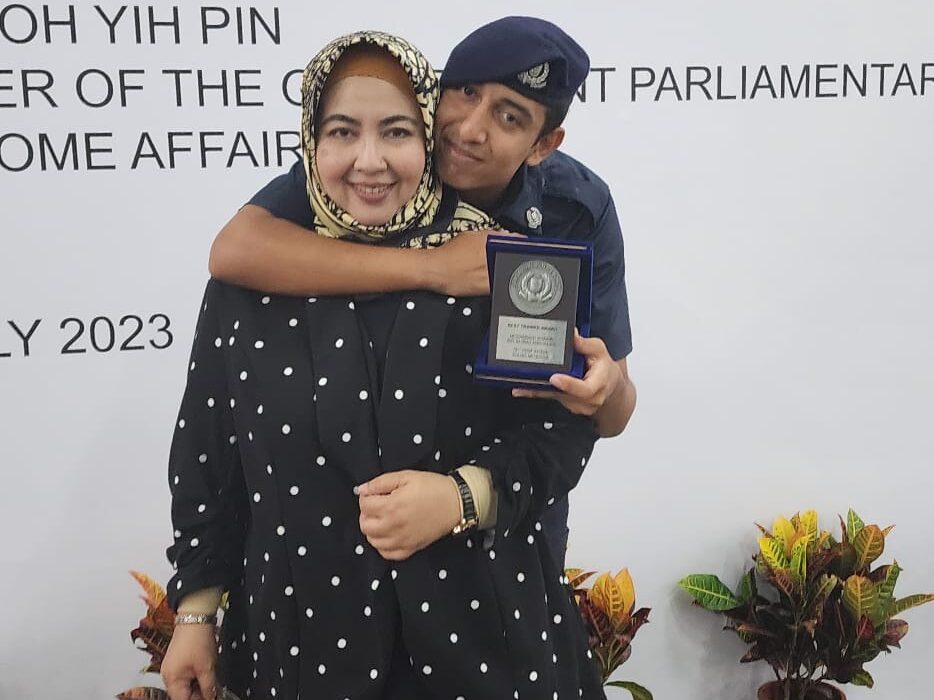
Muhammad Shakir Bin Shiraj Abdullah was twelve years old the first time he watched his mother open her hand and give away money they didn’t have.
They were living in a rental flat in Ang Mo Kio. Cold water showers. Rice and dal stretched as far as it could go. His father had left. His mother was raising three children alone on a social worker’s salary.
And still, when someone needed more than they did, she gave.
“Mommy, why?” he would ask her, frustrated. “We don’t even have for ourselves.”
Her answer never changed: “Whatever we give will come back, okay?”
Shakir didn’t understand it then. He’s not sure he fully understands it now. But he has spent his whole life watching it be true.

The Woman Behind the Student
His mother has worked at AWWA for 13 years, supporting underprivileged families through some of the hardest seasons of their lives. Not as a job — as a calling. Even when she was the one in crisis.
In the year Shakir started university at NTU Business, she was diagnosed with a severe health condition requiring major surgery. The surgery was followed by 40 consecutive days of radiotherapy — every day, no exceptions. Because she couldn’t walk, every trip meant three Grab rides. Every single day. For forty days.
Shakir was 24, working two to three days a week at a telco company while studying full-time. He was commuting up to four hours daily from home. His income kept the household running. Barely.
And through all of it, before she had fully recovered, his mother went back to work.
“If she doesn’t work,” Shakir explains, “her clients are the ones affected. And it’s not like business clients — it’s real families.”
He says this with a particular kind of quiet. The quiet of someone who has watched a person choose others over themselves so many times it no longer surprises him — only moves him.
“She has all the reasons to give up. And it would be justifiable. But she always wants to help. I don’t understand it.”
Then, softer: “She’s genuinely my heart and soul.”
What He Built From What She Showed Him
Shakir’s resilience wasn’t formed at NTU. It was formed in a rental flat, during a divorce, during homelessness in his PSLE year, during his father’s death in 2020 — the same year COVID hit, the same year he was sitting his A-levels.
“I fell into a very, very deep depression,” he says. “It was something I couldn’t get out of for months. My academics were affected. My activities were affected. My friendships were affected. I lost a lot of people.”
What brought him back wasn’t a programme or an intervention. It was a conviction his mother had modelled for him without ever stating it directly: you cannot wait for someone to rescue you.
After NS, he interned at a telco company doing sales and partnerships. He was good at it — genuinely good. His manager told him so, and told him to consider business school. So Shakir chose NTU Business strategically. Not for prestige. For leverage. A faster path to a stable career, which meant a faster path to taking care of his family.
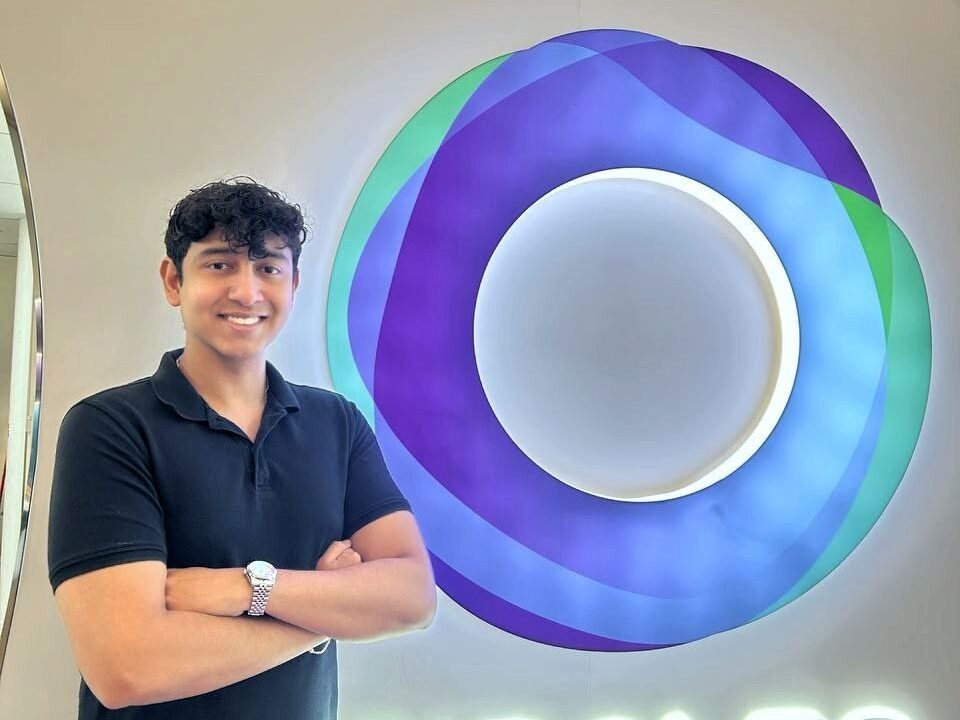
“My top priority isn’t formal education,” he says plainly. “It’s to provide for my family. But when you come from an underprivileged family, you don’t have a safety net. You make a mistake and everything falls down. Education in Singapore creates that safety net so you’re allowed to take risks.”
His mother taught him generosity. The system taught him to be precise about survival.
The Things That Became Impossible
University, for Shakir, was a constant calculation.
Four hours of commuting daily. Two to three work shifts a week. A mother recovering from major surgery. Household expenses that didn’t pause for exam season.
Some things quietly fell off the list. Overseas exchange — a standard resume-builder for NTU Business students — became unthinkable. Campus activities, networking events, the ordinary texture of student life: these were luxuries his schedule and his budget couldn’t accommodate.
“I didn’t know how I was going to sustain university,” he says. “Exchange was out of the picture. I couldn’t even think about it.”
He wasn’t failing. He was managing — which, for students like Shakir, can look identical from the outside and feel completely different from within.
The Day He Sat Her Down
When Shakir found out he had received the Maybank Islamic Berhad (MIB) Sponsorship Programme through LBKM, he didn’t tell anyone immediately.
He needed time to process it. $10,000 felt enormous — almost too large to hold. “We’re always scared of big money growing up,” he says. He didn’t know how to carry news like this into a home that had learned to expect less.
Finally, he sat his mother down.
“Remember I applied to LBKM?” he started. “I didn’t get it.”
Her response was immediate. Gentle. The response of a woman who has spent a lifetime teaching her son that closed doors aren’t the end of anything.
“Never get? It’s okay, son. More opportunities.”
He let a beat pass.
“I’m kidding, mommy. Look at this.”
He passed her his phone.
She cried. “No, no, no. You’re pranking me.”
“I’m not pranking you. Alhamdulillah.”
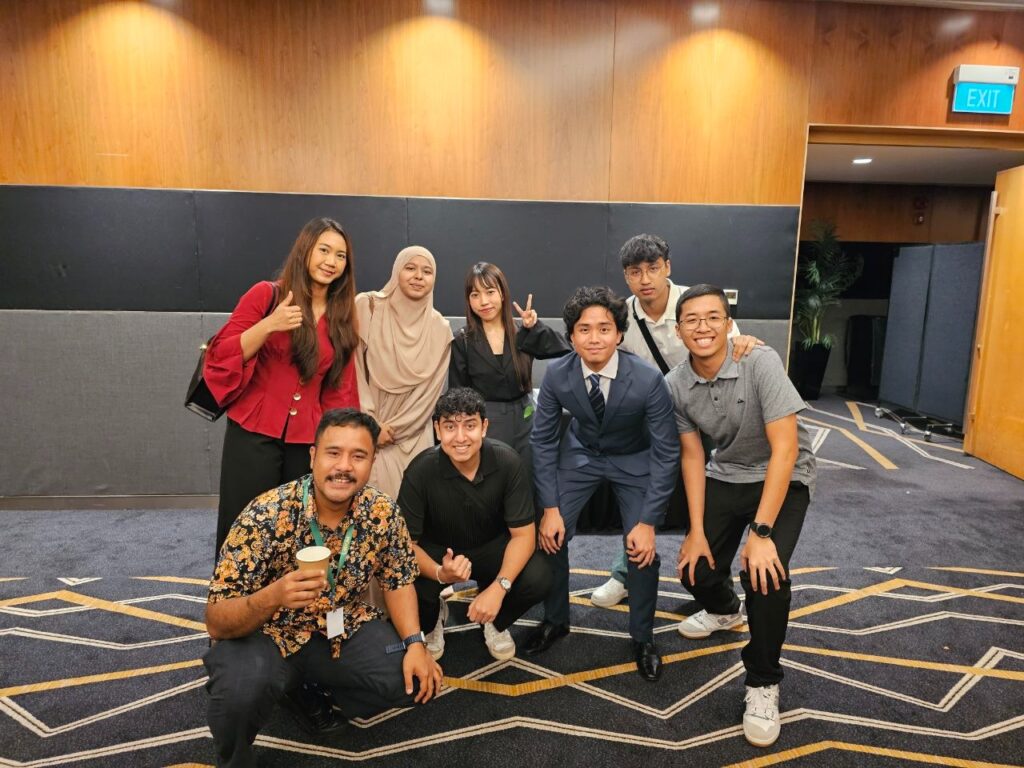
What $10,000 Buys
It bought him a dormitory spot near campus — and with it, four hours a day back. Twenty-plus hours a week that had been spent on buses and trains were now spent studying, joining, building.
It bought him the ability to reduce his work hours without the household collapsing. Mental space returned. The constant low-grade arithmetic of survival — can I afford this, can I afford that — quieted enough for him to actually learn.
Exchange programmes became possible. Campus organisations became accessible. University started to feel, for the first time, like something he was allowed to fully inhabit.
“It helped me breathe,” he says.
He is still working. He still volunteers with his mother at AWWA events. In December, he organised fellow MIB recipients to join him in volunteering at a major event for underprivileged families — the same families his mother has spent 13 years serving.
The inheritance, it turns out, is not just emotional. It is enacted. Repeatedly. Deliberately.
What He’s Building Toward
Shakir’s goals are not dramatic. A stable career in marketing, international trade, or banking. A home his mother can finally rest in. Enough saved to absorb the next crisis without it becoming a catastrophe. Children, someday, who never experience what he did.
“I want to choose a lifestyle where I can be around my loved ones,” he says. “I don’t want to work 9 AM to 3 AM if it means I can’t be there for my family.”
He learned that from her too.
When asked what he wants people to understand about students like him, he doesn’t talk about hardship or grit or the odds he overcame. He says this:
“When you’ve lived through instability, you learn not to wait for rescue. You learn to build your own foothold. But it doesn’t mean you have to do it completely alone.”
His mother has known this for thirty years. She just never needed $30 to prove it.