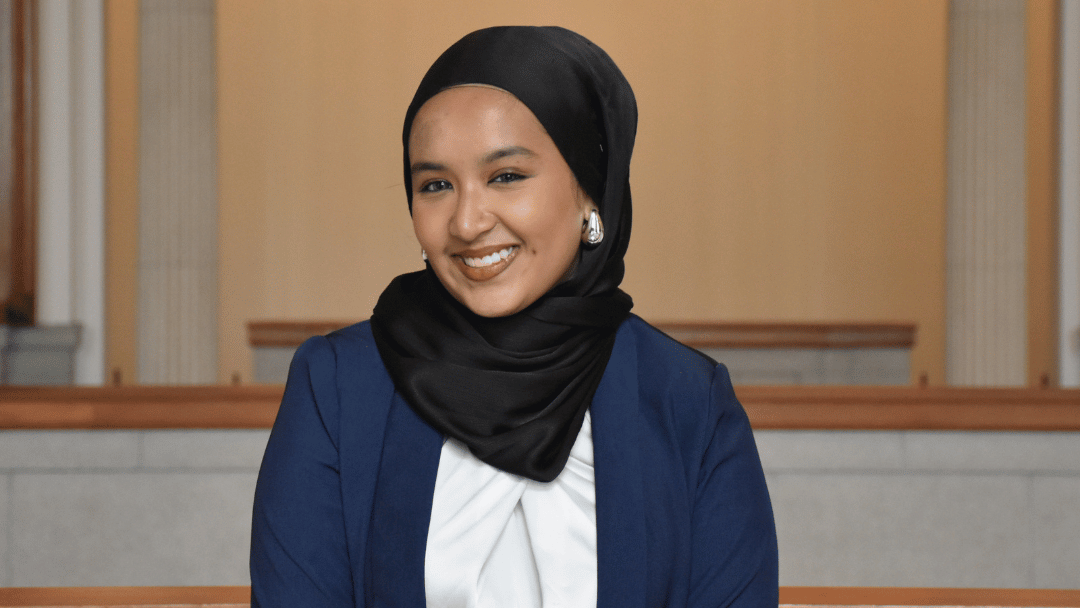
When Duran Nur Irdina Elmasita Binti Mohd Fadzli received her acceptance letter to the National University of Singapore (NUS), the moment was monumental. She wasn’t just joining a prestigious institution; she was the first in her family to ever attend university.
That achievement brought immense pride, but it also came with a significant, silent pressure. As she reflected in her scholarship application, the goal was to succeed not just for herself, but to honour the sacrifices of “the ones who never had the chance to.”
Now a 23-year-old Bachelor of Social Sciences student and a recipient of the prestigious LBKM Prestigious Undergraduate Scholarship, Irdina’s story carries a clear conviction: Education is a vital tool for finding strength and fulfilling an obligation to others. It is a powerful narrative of resilience through education.
A Foundation Built on Struggle and Faith
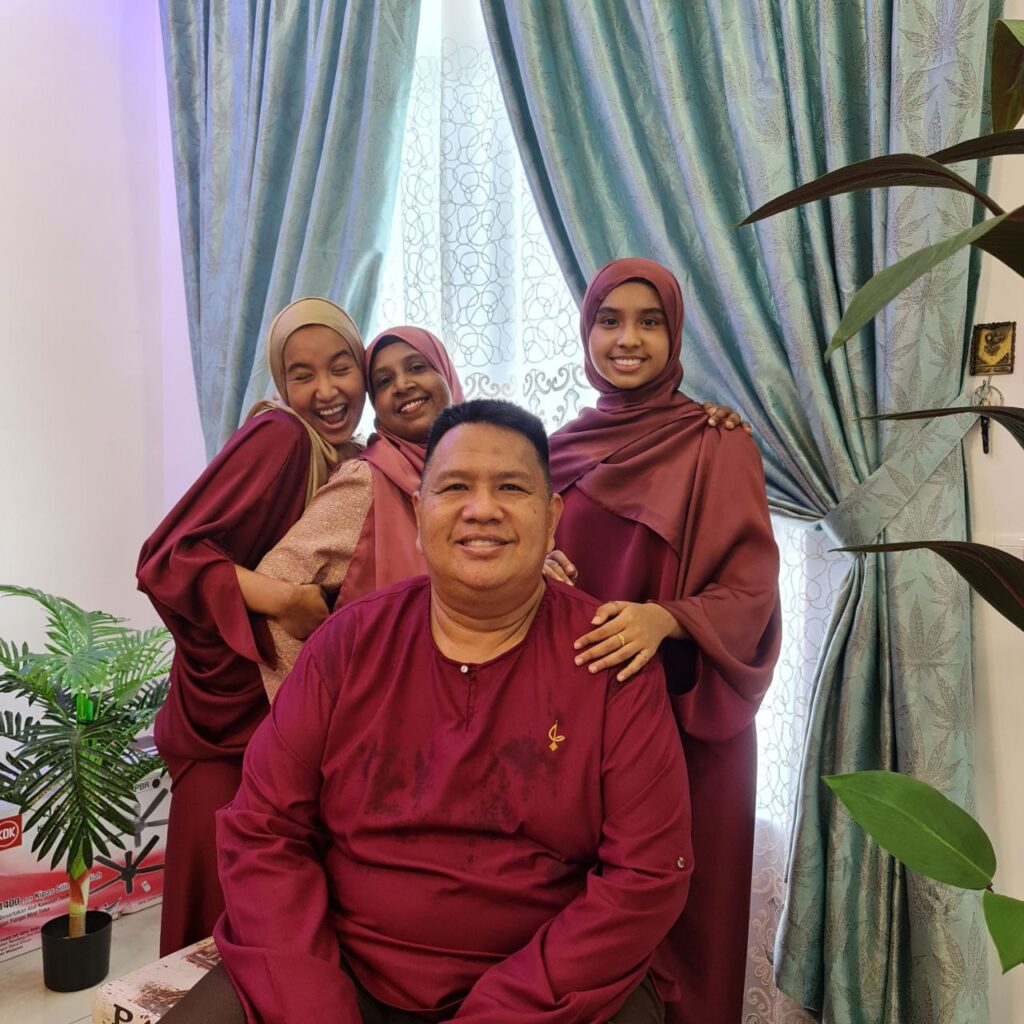
Irdina’s early life was defined by the unwavering grit and sacrifices of her parents in a lower-middle-class household. She recalls witnessing their daily efforts to maintain financial stability. Her father, who had to stop his formal education at Victoria School due to severe poverty, continued working, often cooking only instant noodles at his workplace to cut down on expenses. Her mother constantly worked exhausting 12-hour night shifts.
It was this sustained effort that taught her the true meaning of empowerment.
“That sustained act of sacrifice sits in my heart whenever I think of empowerment,” Irdina shares. “My mother taught me that real strength isn’t loud—it’s quiet, consistent, and full of faith.”
Despite the hardship, her parents instilled an unshakeable perspective: “It is better to have nothing but Allah, than to have everything and not have Him.” This foundational faith amid difficulty established the roots of her resilience.
The First in Her Family’s Fight for University
The decision to pursue university became Irdina’s first major stand. While she had always dreamed of studying political science, her family’s immediate goal, as she notes, was “for me to actually step into the workforce, go get some money.”
She recalls her parents being “set and ready” for her to pursue a stable diploma job—perhaps in the ICA or police—and were taken aback when she gained acceptance to NUS. The financial roadblock was immediate.
“We had a sit-down session and they asked, ‘How much do we need to pay?’ I said, ‘$8,250 per year.’ My mom simply said, ‘Is it actually worth it to pay $8,000 per year?'”
Irdina realized that without a history of university education in the family, they could not understand its substance or long-term value. She had to passionately argue the necessity of a degree in the Singapore context.
She was driven by her deepest motivations: giving back to her parents and striving for a better quality of life. Eventually, seeing the opportunities she accessed, her parents realized the value of her choice.
Turning Personal Battles into Empathy
Irdina’s personal resolve was severely tested when she battled Topical Steroid Withdrawal (TSW), a painful and debilitating skin condition. The illness did not just affect her physically; it strained her family financially, limiting them to public healthcare options.
The illness ultimately became the catalyst for her deep sense of empathy.
“The illness made me realize how fragile life is,” she says. “But it also showed me the power of human compassion… When you’ve lived through the struggle yourself, you listen differently. You see people more fully.”
This empathy fundamentally shaped her academic interests, leading her to believe that effective change begins by listening to the lives shaped by social policy.
Leading with Strategic Inclusivity
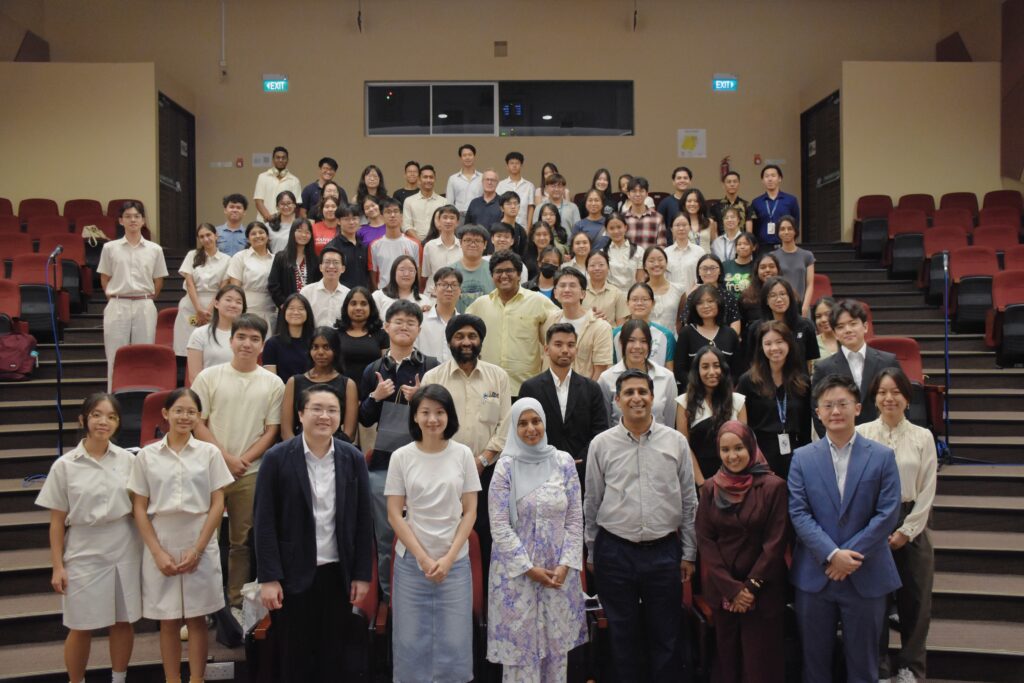
Irdina’s leadership roles are defined by her determination to build equitable spaces, a principle she brought to the National University of Singapore’s Political Science Society (PSSOC) as its President. She recognized that policy discussions often felt exclusive, favoring students from traditional academic routes.
She led the strategic expansion and re-branding of flagship policy initiatives. This included transforming the Singapore Undergraduate Policy Conference into the Singapore Youth Policy Competition (SYPC).
“These efforts were not simply cosmetic,” Irdina states. “They were deliberate and strategic moves to build more equitable spaces in the education landscape.”
By expanding the competition’s reach, Irdina ensured that junior college and polytechnic students—groups often sidelined in such high-level conversations—were actively brought into the political discourse. Her leadership goal was simple: to create spaces where every student’s story could be heard.
Advocacy for Agency and the Unheard
Irdina’s commitment to policy is also fueled by specific advocacy goals, inspired by former NMPs like Dr. Syed Harun Alhabsyi and Associate Professor Dr. Razwana Begum (whose visibility as a Muslim woman was important to Irdina).
She is deeply committed to supporting Persons with Disabilities (PWDs), a cause close to her heart because of her cousin who is autistic. She believes it is crucial to ensure PWDs can feel “valued by the people around them” in workplaces and community settings, pushing for better integration.
Her stance on women’s agency is a direct response to her own experience of being judged:
“I’ve been told a lot that I have a very strong voice and that I’m ‘too outspoken for a woman’ or ‘very unconventional’,” Irdina shares. “I really didn’t know how to feel about those comments sometimes, but I realized the only way to live with this is just to embrace it.”
This challenge propelled her to mentor other women, especially those who feel they are “too soft” to enact change. She aims to help women realize they have the agency to speak up and lead. “Sometimes in your softness also, you can actually make a certain change,” she affirms, resisting rigid cultural expectations.
The Obligation to Give Back
For Irdina, community involvement is not a choice—“it is an obligation to give back.” She strongly rejects the concept of the “self-made individual,” believing instead that success is “a product of the people that surround you and resources that have been provided to you.”
As a mentor and academic tutor for Yayasan MENDAKI, she teaches Primary 5 Math and Science, but her primary focus is empowerment. She regularly updates parents and makes sure the kids believe in themselves.
“We don’t have to necessarily build on their grades but we need to empower them to believe that they can do something in life… That’s where you really try to tap on the potential and make them believe in themselves,” she says.
Her resolve to serve is reinforced by her experience volunteering at Meet-the-People Sessions, where she witnesses up close how a lack of finance creates a crushing trickle-down effect on people’s lives. She realized her own position was an amanah (trust) to help.
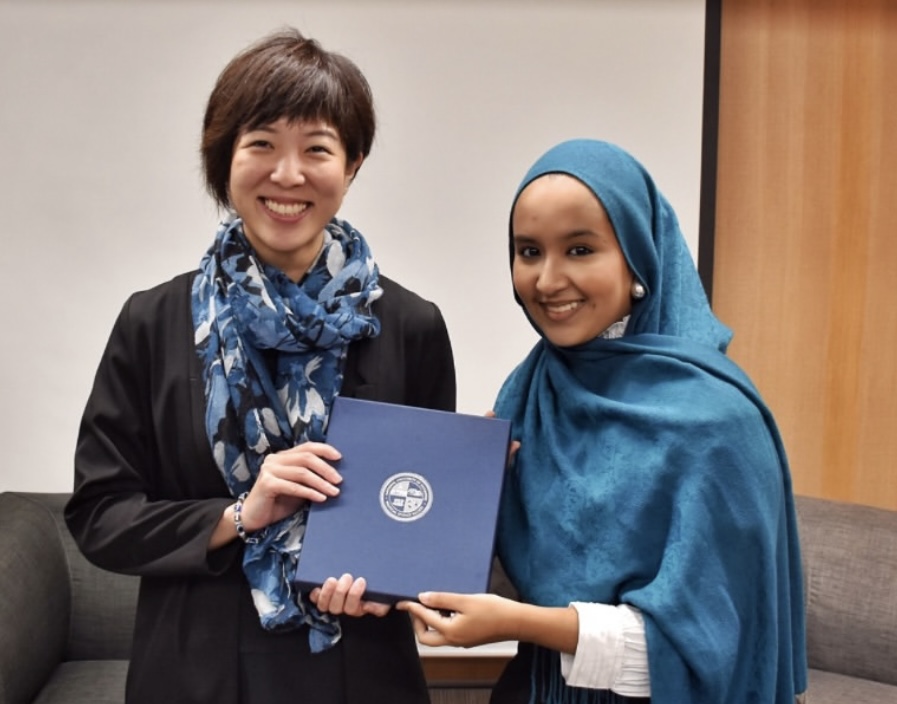
Receiving the LBKM Prestigious Undergraduate Scholarship was a profound validation that confirmed her trajectory. “It was someone telling me—‘We see you, and we absolutely believe in your future’,” she shared.
“My dreams are not just mine,” she concludes. “They are for every child who went through similar experiences as mine. They have moulded me to be resilient and to be even more dedicated to work harder for my family, my community, and for the future I hope to build—one that breaks the cycle.”
Learn more about our scholarships or make a contribution to support the next generation of changemakers.