

For Mahirah Firzanah Binte Sulaiman, architecture is more than a career path — it’s a language of empathy, culture, and innovation.
At just 21 years old, the LBKM Undergraduate Prestigious Scholarship recipient is pursuing her Bachelor of Science in Architecture at University College London (UCL), one of the world’s top universities. Her journey reflects a deep commitment to designing spaces that are inclusive, affordable, and rooted in heritage — principles she hopes will define the future of the built environment.
From Music to Making
Before she began designing buildings, Mahirah learned to compose songs. Raised in a family of six, her father — a musician — introduced her to rhythm and creativity early on. “He would ask me to assemble and disassemble furniture,” she recalls with a smile. “That’s when I started noticing how every detail connects to form something whole.”
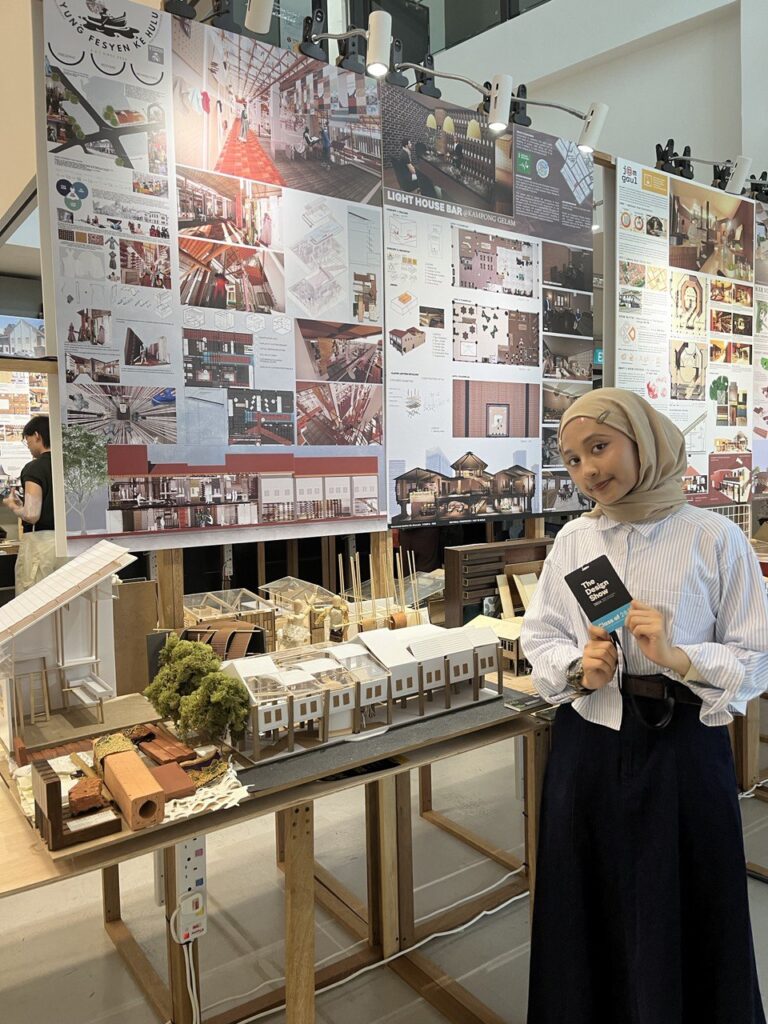
That curiosity grew into a fascination with structure and form. In secondary school, Mahirah enjoyed practical coursework and hands-on projects. At Temasek Polytechnic, she found her footing in Interior Architecture and Design, graduating second in her cohort.
“I like that design is never one-dimensional,” she says. “You can’t create from behind a desk. You need to understand people — how they live, move, and feel.”
Designing With Empathy
Mahirah’s approach to architecture is grounded in inclusive design — creating environments that serve a wide range of human needs. Her interest began during the pandemic, when she found herself watching documentaries about tiny homes and rethinking how small spaces could still feel meaningful.
“It made me wonder how similar ideas might work in Singapore, where space is precious,” she says. “Good design isn’t about luxury — it’s about empathy.”
Her portfolio demonstrates this philosophy. One project focused on designing a care centre for dementia patients, integrating sensory cues and memory-triggering layouts that evoked Singapore’s familiar past. Another involved a product for accessible food preparation, enhancing usability for both physically and non-physically challenged individuals.
“These experiences taught me that thoughtful design can restore dignity,” she reflects.
Bridging Heritage and Modernity
Mahirah’s identity as a Malay Muslim designer deeply informs her work. “I’ve always tried to include a hint of Malay culture in my projects,” she says. “It could be through materials, traditions, or social spaces that reflect our way of life.”
Her Kampong Glam project, completed during her diploma studies, explored the area’s role as a historic textile and fashion hub. She proposed transforming it into a community-focused fashion innovation centre — blending sustainability, cultural storytelling, and modern craftsmanship.
Now at UCL, Mahirah finds herself inspired by London’s architectural character. “Buildings here have history,” she says. “The brickwork, the Gothic windows, the way light shifts through the day — they all give a space emotion. It makes me think about how to bring that depth back home, while staying true to our tropical identity.”
Rethinking Affordable Spaces
When asked what she would design if given unlimited resources, Mahirah doesn’t hesitate.
“I’d build affordable housing — homes that are comfortable, sustainable, and cost-effective,” she says.
She has thought deeply about Singapore’s housing model and the emotional impact of space. “Natural light affects your mood,” she explains. “If I could change one thing about our flats, I’d make the windows larger and the spaces taller. It’s simple design, but it changes how people feel.”
For Mahirah, affordability and inclusivity are not opposites — they’re part of the same vision. “Everyone deserves a space that feels like home,” she says. “That’s what I want my designs to stand for.”
Creativity, Culture, and Connection
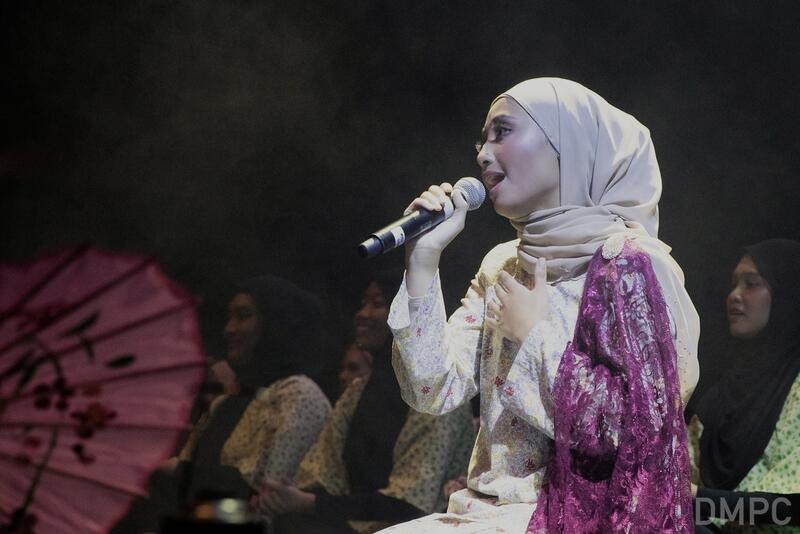
Beyond the drafting table, Mahirah is an artist in every sense. She sings, plays piano and guitar, and has performed traditional Malay dance and Silat. In 2019, she performed as a solo artist at the President’s Star Charity event.
“Music and architecture share the same rhythm,” she reflects. “Both require balance — between focus and rest, between structure and emotion.”
These experiences, she says, have shaped how she approaches design: as an act of storytelling that honours the past while embracing the future.
A Vision Supported
UCL’s emphasis on interdisciplinary learning and social impact aligns perfectly with Mahirah’s goals. “I chose UCL because it pushes students to think beyond the studio,” she says. “It’s about addressing real-world challenges through creativity and collaboration.”
Her scholarship from LBKM — worth $10,000 — recognises both her academic excellence and her potential to make meaningful impact.
LBKM is proud to support scholars like Mahirah, who see education not just as a means to achieve, but as a responsibility to serve. Her journey reflects what LBKM stands for — that education can open doors, inspire empathy, and make inclusive futures possible.
Learn more about our scholarships or make a contribution to support the next generation of changemakers.